
Residential Sealcoating Services in Morris, NY
Residential Sealcoating Overview
Residential sealcoating in Morris, NY involves the application of a protective asphalt coating designed specifically for home driveways and private paved surfaces. S & J Sealcoating provides this service throughout Morris and surrounding communities within a 50-mile radius, focusing on maintaining the condition of residential asphalt exposed to seasonal weather changes, vehicle traffic, and surface aging.
Driveways in residential settings experience gradual wear caused by sunlight exposure, moisture penetration, freezing and thawing cycles, and regular vehicle movement. Over time, untreated asphalt begins to lose its dark surface color and becomes more porous, allowing water and contaminants to penetrate deeper into the pavement structure. Sealcoating is applied as a surface treatment that restores a uniform protective layer over the driveway.
In residential environments, sealcoating is typically applied to asphalt driveways, private lanes, and small parking areas. The process does not rebuild or resurface the asphalt but instead works as a protective barrier that helps reduce surface oxidation and slows down the natural aging process of the pavement.
Surface Preparation for Residential Driveways
Proper preparation of residential driveways is an essential step before any sealcoating material is applied. The condition of the existing asphalt determines the level of preparation required to ensure proper adhesion of the coating.
Driveway Cleaning and Debris Removal
Residential driveways are first cleared of dirt, loose gravel, grass growth along edges, and surface debris. This process ensures that the coating is applied directly to the asphalt rather than to contaminants that could interfere with bonding. Mechanical sweeping and air blowers are commonly used during this stage.
Oil Stain Treatment and Surface Spot Cleaning
Areas affected by oil leaks or automotive fluids require targeted treatment before sealcoating. These stains are cleaned using specialized degreasing methods designed to reduce surface contamination. In residential settings, these areas are often located where vehicles are regularly parked.
Crack Identification and Filling
Small cracks that form in asphalt driveways are identified and filled prior to coating application. These cracks are typically caused by seasonal expansion and contraction of the pavement. Filling these areas helps stabilize the surface and reduces the potential for water intrusion beneath the asphalt layer.
Curing and Reopening Process
After application, the sealcoat requires a curing period before the surface can safely handle traffic. During this stage, the coating hardens and bonds with the asphalt underneath. Proper curing ensures durability and reduces premature wear caused by vehicle movement or moisture exposure.
Minor Crack Sealing
Thin surface cracks are filled with flexible sealing materials that move with the pavement during temperature changes. This prevents further spreading and surface weakening over time.
Wider Crack Repair
More pronounced cracks require deeper filling methods using rubberized compounds designed for asphalt stabilization. These repairs help maintain a more even surface prior to sealcoating.
Sealcoating Application Process for Homes
The application of sealcoating on residential driveways follows a structured process designed to ensure even coverage and proper curing under local environmental conditions in Morris, NY.
Surface Conditioning Before Application
Before sealcoat is applied, the driveway surface must be fully dry and free from moisture. Temperature and humidity levels are evaluated to ensure that conditions are suitable for application. Residential sealcoating is typically scheduled during stable weather periods to allow proper curing.
Sealcoat Mixing and Preparation
The sealcoating material used for residential driveways is mixed to achieve a consistent texture and flow. This ensures uniform application across both smooth and slightly textured asphalt surfaces. Proper mixing also helps maintain coating stability during application.
Application Across Driveway Surfaces
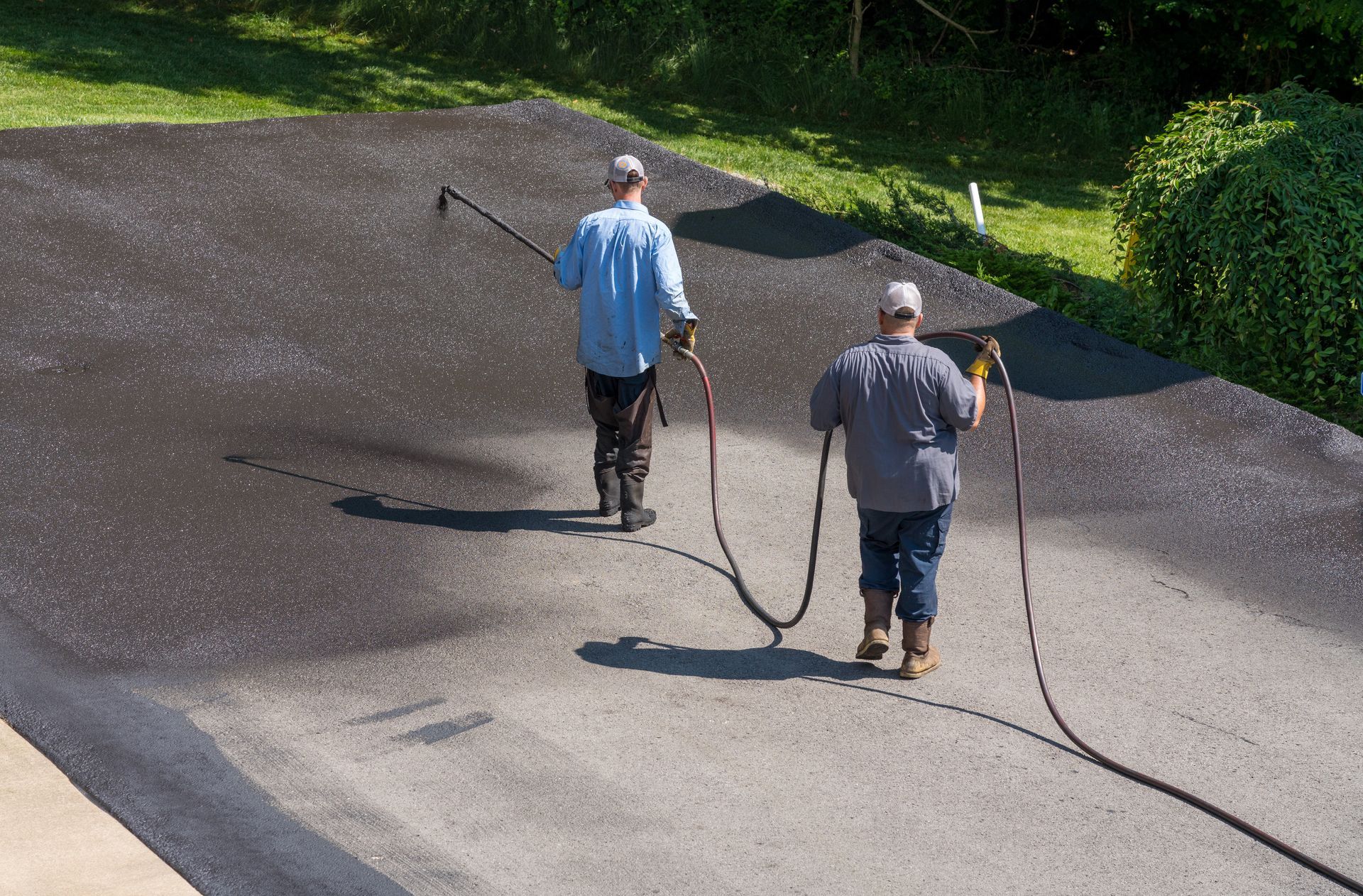
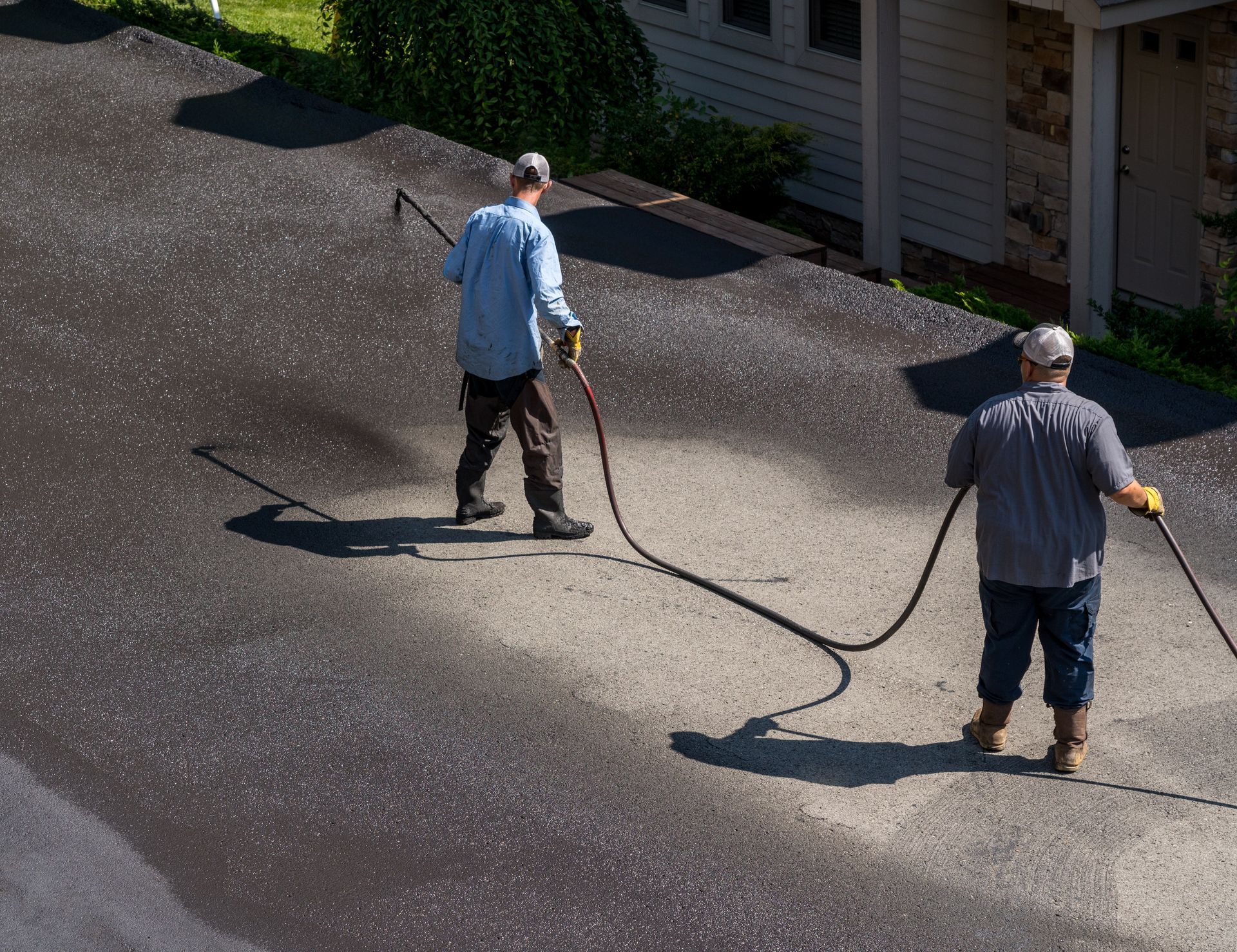
The sealcoat is applied evenly across the entire driveway surface using spray or squeegee methods depending on layout and condition.
Edge and Border Application
Driveway edges, borders, and transitions near walkways or garages require controlled application to ensure consistent coverage without overflow onto adjacent surfaces.
Central Driveway Coverage
The main driving and parking areas are coated with uniform layers to create an even surface appearance. Multiple passes may be used in areas with visible wear or oxidation.
Curing and Drying Period
After application, the sealcoated surface requires a curing period during which it must remain free from vehicle traffic and moisture exposure. This allows the coating to harden and bond properly with the underlying asphalt surface.
Materials and Equipment Used in Residential Sealcoating
Residential sealcoating projects in Morris, NY utilize materials and equipment selected specifically for driveway-scale applications and local environmental conditions.
Asphalt-Based Sealcoating Materials
The primary material used in residential sealcoating is an asphalt-emulsion based coating designed to bond with existing pavement surfaces. This material forms a protective layer that adheres to asphalt and creates a consistent surface finish once cured.
Application Equipment for Driveways
Smaller-scale application equipment is used for residential projects to ensure controlled coverage.
Hand-Operated Squeegee Systems
Squeegee tools are often used to spread sealcoat evenly across residential driveways, particularly in areas that require precise application around curves, edges, and narrow sections.
Spray Application Tools
Spray systems may be used on larger residential driveways to distribute material evenly and efficiently across broader surfaces.
Surface Preparation Tools
Preparation tools such as blowers, brooms, and cleaning equipment are used to ensure the driveway surface is properly cleared before coating begins. These tools help maintain a clean application base and support proper adhesion.
Residential Driveway Conditions and Environmental Factors
Residential sealcoating in Morris, NY is influenced by seasonal weather patterns and environmental conditions that affect asphalt performance over time. Driveways in this region are exposed to freezing winters, rainfall, and summer heat cycles, all of which contribute to surface aging.
Seasonal Temperature Changes
Repeated freezing and thawing cycles cause expansion and contraction in asphalt surfaces. Over time, this movement leads to surface cracking and gradual weakening if left untreated.
Water Exposure and Drainage
Residential driveways must manage surface water from rainfall and snowmelt. When asphalt becomes porous due to aging, water can seep into the base layers, contributing to structural deterioration beneath the surface.
Sunlight and Surface Oxidation
UV exposure gradually breaks down the binding agents in asphalt, causing the surface to fade and become brittle. Sealcoating provides a surface layer that reduces direct exposure to sunlight and slows oxidation.
Residential Service Area Coverage with S & J Sealcoating
S & J Sealcoating provides residential sealcoating services throughout Morris, NY and extends service coverage to surrounding communities within a 50-mile radius. This service area includes a mix of rural, suburban, and semi-urban residential properties with varying driveway sizes and surface conditions.
Scheduling for residential projects is coordinated based on driveway size, weather conditions, and surface preparation requirements. Each project is planned to ensure adequate curing time and proper surface setting before driveways are returned to regular use.
Residential sealcoating services are applied to individual homes, private driveways, and small shared access roads, ensuring consistent surface treatment across a wide range of residential property types in the region.